Professional · Feb–May 2025
Hellhound Academia
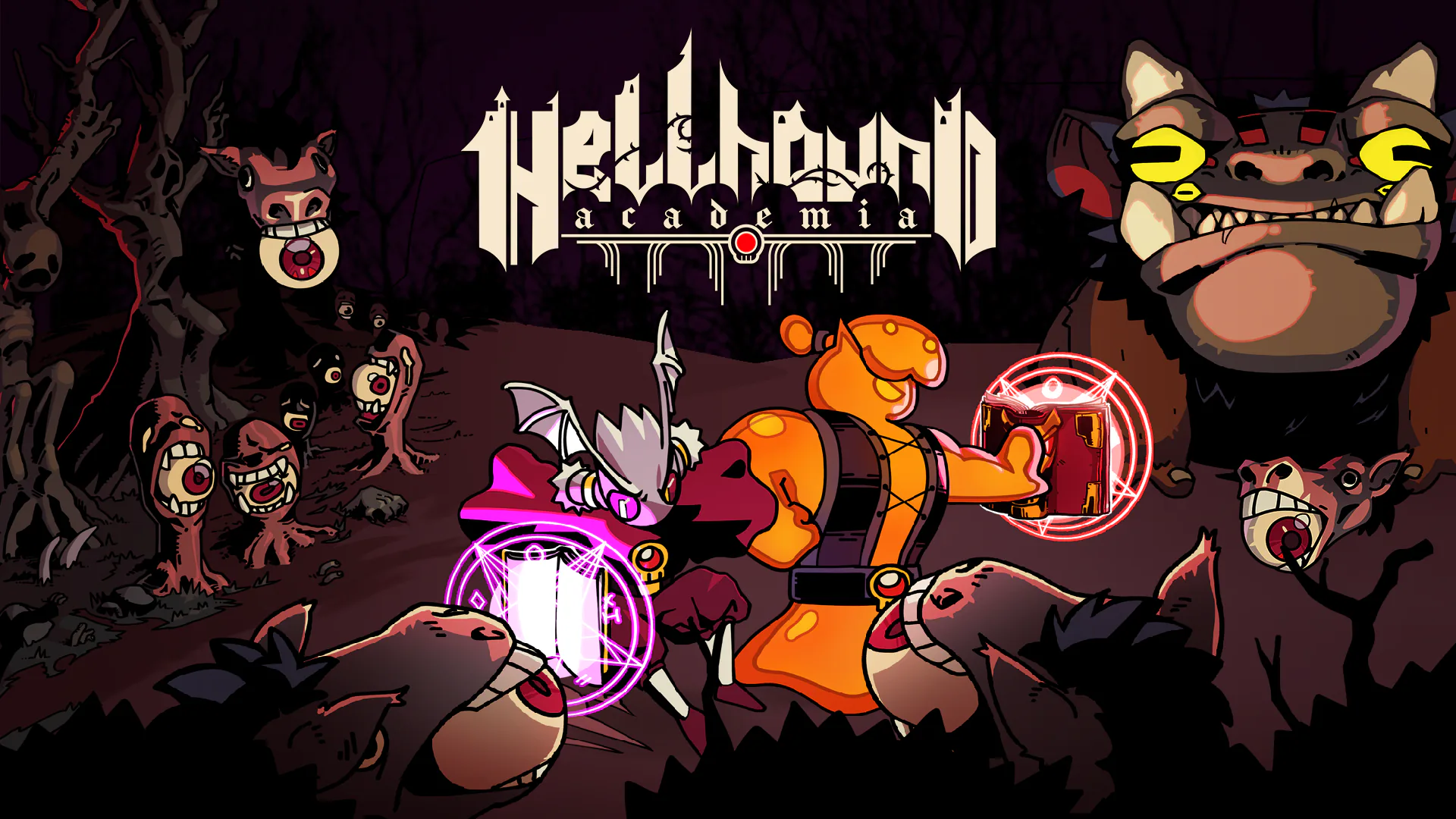
Deck-building shooter with local co-op, from my internship at Point N' Sheep.
TL;DR
- Helped build player movement, AI behaviors and UI interactions in Unity, as modular SOLID components for fast iteration.
- Helped make a system that detects and organizes level-design assets automatically, which cut level-creation time by 30%.
- Helped build input-device detection that switches the UI and control scheme to match the player's device.
- Helped profile and optimize runtime performance: object pooling, draw-call batching and refactored update loops.
Overview
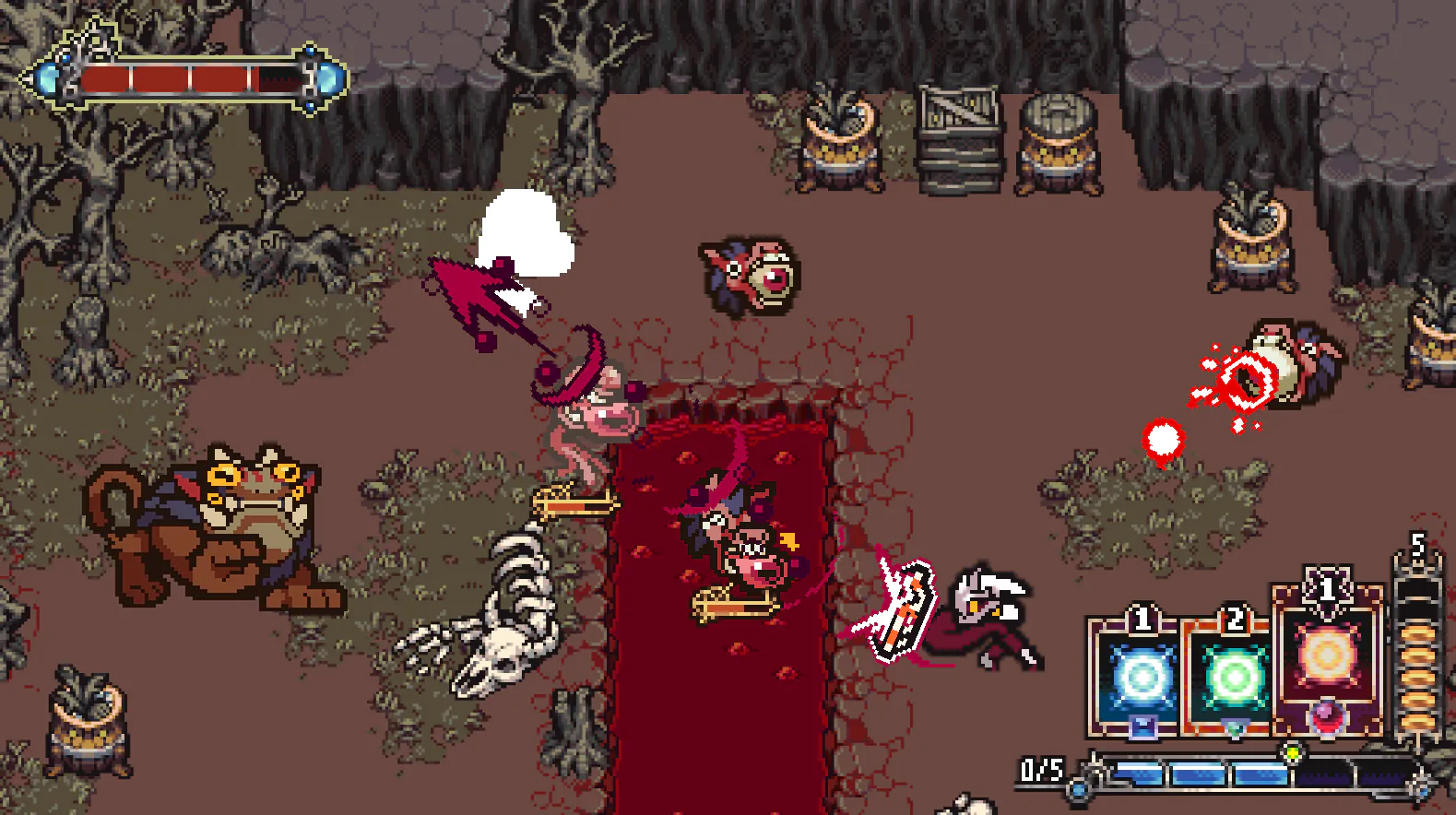
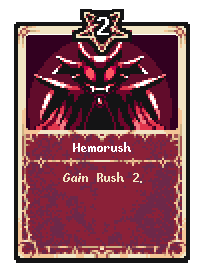
Hellhound Academia was a deck-building shooter in development at Point N' Sheep (opens in a new tab), a studio in Recife, while I was a Game Programming Intern there in 2025. You master the arcane arts of spell cards, team up with a second player in local co-op, and fight through the legions of hell. Card types tied into the characters, like blood-type cards for Harvester and fire-type cards for Moltenclaw.
The game was canceled some time after my internship ended, so it was never released. All the art shown here is the studio's.
What I worked on
As an intern, I worked on these systems with the rest of the team rather than on my own. Here's where I helped:
- Gameplay: helped build player movement, AI behaviors and UI interactions in Unity (C#), as modular SOLID components so the team could iterate quickly.
- Level-design tooling: helped make a system that automatically detects and organizes level-design assets, which cut level-creation time by 30%.
- Input: helped build dynamic input-device detection that adapts the UI and the control scheme automatically, so the game feels native on each platform.
- Performance: helped profile the game and reduce CPU and GPU bottlenecks with object pooling, draw-call batching and refactored update loops.
- Integration: helped bring the artists' and designers' work into the game, and found and fixed bugs. When the pixel artist asked, I also adjusted sprites in Aseprite.
Working in a studio
This was my first time on a professional game team. Working directly with artists and designers every day meant helping build systems other people could use and tune on their own, and keeping performance in check as content piled up.
Results
- Faster level creation: the asset detection system I helped make cut level-creation time by 30%.
- Systems the team could tune: movement, AI behaviors and UI interactions were modular SOLID components, so the team could iterate on them quickly and adjust them on their own.
- The right controls on each device: the UI and the control scheme switched on their own to match the player's input device.
- Fewer performance bottlenecks: the profiling and optimization I helped with reduced CPU and GPU bottlenecks, through object pooling, draw-call batching and refactored update loops.
- Art and design in the build: I helped bring the artists' and designers' work into the game, and found and fixed bugs along the way.
All of this was in-development work: the game was canceled after my internship and never released.
Media
Screenshots and art
Art: Point N' Sheep Art: Point N' Sheep Art: Point N' Sheep Art: Point N' Sheep Art: Point N' Sheep Art: Point N' Sheep Art: Point N' Sheep Art: Point N' Sheep Art: Point N' Sheep Art: Point N' Sheep Art: Point N' Sheep Art: Point N' Sheep
Like this?
Let's talk
Open to conversations about developer and production roles, and collaborations. I'm in Recife, Brazil (UTC−3).